
If your Klargester type or brick built septic tank appears to be full and backing up, what do you do? It is likely that the drainage field has come to the end of it’s life, caused by a blocked soakaway, clogged with organic matter from the tank. Once the water gets above the outlet pipe then the floating solids can escape! Then the soakaway quickly deteriorates. Floating solids are fats, oils, and grease (FOG) from the kitchen and block the pores of the soil. Bacteria just can’t digest them and so you are doomed!
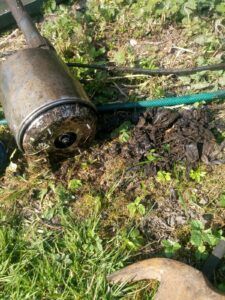
Septic Tank Emptying?

When you have Septic Tank Problems, its time to invest!
Don’t keep throwing your money down the drain!

Talk to someone who knows all there is to know about how to improve the situation. Your situation! Allerton can advise on the best course of action, whether it be extending the soakaway, converting the septic tank to a fully fledged Sewage Treatment Plant or simply installing a Diamond unit. We will provide costs as we discuss the options so you are able to make a careful decision about your investment!
Contact us to discuss your sewage solutions.
So without further ado…
Here is Allerton’s list of 5 most common Septic Tank Problems and Septic Tank Solutions
1. Failed soakaway
Quite often it is a failed soakaway/drainage field, not a failed septic tank. If the septic tank has been okay for several years and only recently has started to back up then it is most likely the soakaway is bunged up. It is a filter after all. Raw sewage has a value of solids to water of 300 ppm. Septic tank effluent at its best is 200 ppm. Water from the big water companies has to be cleaned to 30 ppm. As does water from a private Sewage Treatment Plant To keep to this 200 limit septic tank emptying is recommended once a year. Less frequently emptied than this increases the rise of solids above 200, causing the filter system to overload more quickly. Broken inlet and outlet tee pipes enable rags and wet pipes into the pipes in the ground! These need to be checked and replaced immediately!

2. Septic Tank is too full and the liquid is flowing too quickly through to the soakaway
Septic tank de-sludging must be done once every year. It needs to flow to a drainage field or soakaway as a rule the environment agency will not permit septic tank effluent to reach a ditch or a river. Also the soakaway can’t be within 10 metres of a ditch, river, or land drain. Your septic tank might not work very well if there are too many solids. To fix this issue, avoid flushing wet wipes and other solid objects down the toilet. It is also important to empty your septic tank annually. You can find out more about the government’s General Binding Rules Here.

3. Incorrect Position of the Septic Tank
It needs to be close enough to be de-sludged (ensure you have access and it is not in another inaccessible property). It should be situated preferably on the lower side of the house, within 50 metres of a hard standing (e.g. driveway or farmers field) to allow a de-sludger to reach. Some desludgers can’t reach that far. It is important that nobody drives over it. Allowing heavy traffic to drive over or near a GRP tank will cause cracking. Cast iron covers erode and won’t take the weight of vehicles. Even side pressures can cause problems.
4. Size of septic tank not suitable for number of users
The Victorians used much less water than we do today. Their septic tanks are generally too small for a family of four people. A modern GRP for 4 to 6 people is 2700 litres. The size of tank depends on the number of people it serves. The formula is based one one person per bedroom with two for the house, so for 3 new houses, two with 3 bedrooms, one with 4 would be 16. It would need the tank suitable for 20 people (15 people tank being too small !) The Victorians use much less water than we do today. Their septic tanks are generally too small for a modern family of 4 people. Because of decades of overloading the soakaway or drainage field is saturated with grease and organic matter, the septic tank needs replacing, as will the soakaway. The new soakaway needs fresh soil as excavation will show how full of grease etc it is.
At this point we would recommend you invest in a Sewage Treatment Plant, if you are going to spend thousands on a new septic tank plus the cost of a new drainage field. You may find that the Environment Agency will allow you to discharge to a ditch, saving thousands on a soakaway as well as getting the water off your land. They get replaced every 25 years. It is important to pay attention to when and where it gets placed.

5. Sharing a Septic Tank
Sharing a septic tank means one house might experience problems before the other. Shared brick septic tanks are generally too small for two dwellings. They also come with certain agreements which may appear to be unfair in some circumstances. For example, if house has more people than the other and is causing it to need de-sludging more frequently, but you both have to pay for it 50/50 as per the agreement.
Water usage has increased since larger GRP tanks were first installed half a century ago, and the soakaway will now be saturated with grease and organic matter. Relieving the burden of the second house will possibly extend the life of the tank and it’s soakaway. However It may be too late if the ground is saturated. Selling a house with its own new Sewage Treatment Plant is so less troublesome than one with a septic tank. This is especially true if shared.
FAQ
Q: How often does a septic tank need emptying?
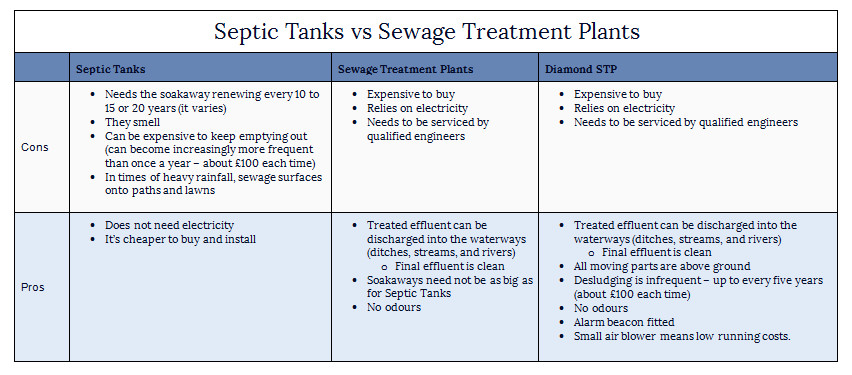
A: As a rule, once a year for the average household. It depends on the size of the septic tank and how many people are using it. Two years is possible, depending on the size of the septic tank. If the frequency is more than once a year, it is usually because a soakaway has failed and that shouldn’t be happening. Check out this table about the pros and cons of septic tanks. Frequent emptying can be quite expensive. Also read this blog post about septic tank problems.
Q: Are there septic tanks that don’t need emptying?
A. No. All septic tanks should be emptied to protect the soakaway! Read the section about septic tank emptying here.
Q: Can rain water go into a septic tank?
A: NO, heavy rain can wash all the stored solids into the soakaway or ditch or block the ConSept.
A: 1. You will need to establish what type of water is flowing through each manhole on the property.
2. You will need to work out where the water from the stormwater manholes flows to e.g. into a ditch or soakaway.
Lift the manhole covers and observe. Have someone flush the toilets, then run the taps for the shower, then bath, etc. The water coming from each of these sources is foul water. And if you see it flowing through the manhole, it is called a foul manhole.
Once you establish that it is a foul manhole, then check to see that no stormwater goes into any foul manhole. To check that, on a rainy day stand in the rain with nobody in the house and see if any water goes through each foul manhole. On a summers day you can squirt water into the gutter to immitate rainfall.
Afterwards, draw a plan of the property and show the foul manholes and pipes in red and the pipes and manholes for the stormwater in blue. This is also useful when you sell the house.
Q: Does shower water go into a septic tank?
A: Yes. All lavatory, showers, wash basins, sinks etc are classed as foul. These must go to the septic tank. Rain water must NOT go into the septic tank.
Q: Which type of septic tank is best?
A: The best ones are made from GRP, glass reinforced plastic. Or Polyetheylene. Concrete ring septic tanks are good but need two chambers.
Q: How long do plastic septic tanks last?
A: Polyethene and GRP septic tanks should last 20 years at least, providing they are emptied every year to protect the soakaway and the baffle.
Q: What is the alternative to a septic tank?
A: A sewage treatment plant, a cesspool, or a reed bed. If there is no room for a soakaway then a cesspool is used. These are huge tanks and expensive to install and expensive to have emptied.
Q: How much does a 3 bedroom septic tank cost?
A: The smallest septic tank is good for a four bedroom house, costing £600 to £750 plus vat.
Q: How many loads of laundry can I do with a septic tank?
A: It is proportionate to the number of people in the house, so it doesn’t matter. However, a septic tank for just laundry is not a good fit. It needs anaerobic bacteria to break down the organic waste and to help break up the chemicals in washing products. Speak to Allerton for advice on this before installing!
Q: How do I know when my septic tank is full?
A: It’s difficult to gauge, so have it emptied every year. This will help lengthen the life of a soakaway. Read here for more details.
Q: Is bleach bad for a septic tank?
A: Only if used excessively.
Q: Can you drive over a plastic septic tank?
A: Septic tanks are not meant to be driven over. However, if a reinforced raft is constructed and there is a small gap between the surface concrete and the tank, then it should be fine. Take professional advice.
Q: How much does a septic tank cost to replace?
Q: What happens if you never pump your septic tank?
A: You ruin the soakaway.
Q: Is a plastic septic tank better than concrete?
A: Just as good but often easier to install. A lot depends on ground conditions.
Q: How do I clean my septic tank naturally?
A: It should emptied regularly by a registered waste contractor. The mess inside the walls of the septic tank is actually full of bacteria and should be left alone. Do not hose it down!
Q: How often does a 1000 gallon septic tank need to be pumped?
Q: Should I buy a house with a septic tank?
A: Yes if the house is right in other regards. But, have it surveyed first. That is most essential.
Q: Does all waste water go to a septic tank?
A: All waste water does not have to go to a septic tank. It could go to a cesspool, a sewage treatment plant, or a septic tank… or better still to the mains. 95% of sewage in the UK goes to the mains.
A: Yes, every year to protect the soakaway.
Q: How does a BioDisc septic tank work?
A: The term BioDisc refers to a Sewage Treatment Plant made by Klargester. It is not a septic tank. It can be discharged to the ditch without EA permission as it is an Exempt unit. It can also discharge to a soakaway if there is no ditch. Read this blog post for more
Q: Does a septic tank need a soakaway?
A: I’m afraid it does. Septic tanks seldom fail! Victorian septic tanks were designed for far less water usage than today’s profligate use. But it is generally the soakaway that needs replacing. This will need to go in another part of the garden if the existing ones position is known and if there is space. The garden may have many old systems. No one knows!
Q: Can a soakaway get blocked?
A: Soakaways from Septic tanks are bound to get blocked. Raw sewage has 300 parts per million (ppm). Water from a septic tank is not much better at 200 ppm. So those fine particles start to block the soakaway, the ground below and around the soakaway pipes from day one!