
So, you’re thinking about replacing your septic tank…
To know how best to replace your septic tank, we must first ask the question, why are you replacing the tank? Or if you’re undecided, why should you replace your septic tank? Is it because the tank has collapsed, too small, or is it because the existing system is clogged and the soil is saturated with organic matter, preventing the effluent from soaking away? The reason will affect what your options are when it comes down to replacing it. Perhaps an upgrade will be sufficient, or maybe you’ll need a whole new drainage field (soakaway), or a bigger tank! Whatever it is, knowing the root of the issue will save you money and time in the future, because you’ll get the solution right 1st time (with a little help from the experts).
When you’re having septic tank problems, it can feel confusing if you don’t know where to start. Diagnosing the issue is the crucial first step. We have a brilliant post on 5 most common septic tank problems, and if you’re not sure, get professionals to help figure it out – like us!

Cost
If you’re replacing it due to selling your property, it’s important to note that a new home-owner would be unlikely to settle for a septic tank, and would install a sewage treatment plant instead. The cost of installing a septic tank is similar to a sewage treatment plant but a sewage treatment plant is about £2000 more than a septic tank.
Septic tanks are really old fashioned and reduce the effluent only a little, by putting water heavily laden with organic matter into the soil, which causes the soil to block. a treatment plant cleans the water by filtering out the organic material, so that you have the option of putting the effluent into the river, or neighbouring ditch. If there is no ditch or river, then you have to lose the water on your own property via a soakaway/ drainage field. Just make sure you’re adhering to the EA guidelines and UK laws for your area to ensure you’re discharging it safely!
If you’re replacing a septic tank then it makes sense to put the field drainage system and soakaway into a different part of the garden, into virgin ground. Simply replacing the septic tank with another, you’re still faced with water going into the same ground, unless you relocate the septic tank to use fresh ground. This isn’t good when the soil is completely saturated with organic material…
Because of the septic tank relocation, you need more pipe-work and soakaway area, leaving the heavily ladened land behind. With a sewage treatment plant system this is possible to have a much smaller soakaway area.

So why pay more?
Septic tanks are really old fashioned and reduce the effluent only a little by putting heavily laden organic water into the soil, which causes the soil to block. Older tanks, like brick built septic tanks, can cause problems due to age, or being too small. GRP septic tanks aren’t without issues either, they’re not as efficient as more modern sewage treatment systems!
A modern treatment plant, like the Diamond Unit for example, cleans the water so that you have the option of putting the effluent into the river, or neighbouring ditch. If there is no ditch or river, then you have to lose the water on your own property. It also takes up less space in your garden with a smaller soakaway area! More space for funner things in your garden, like a patio to bbq on!
If you are keeping the septic tank…
Putting a small pump station next to the septic tank outlet would allow you to put the field drain (SOAKAWAY) into a different part of the garden further away, and have it at a shallower, more effective depth. This can be critical when your garden is small. There is an alternative of course, if it has not collapsed, is to install a septic tank conversion.
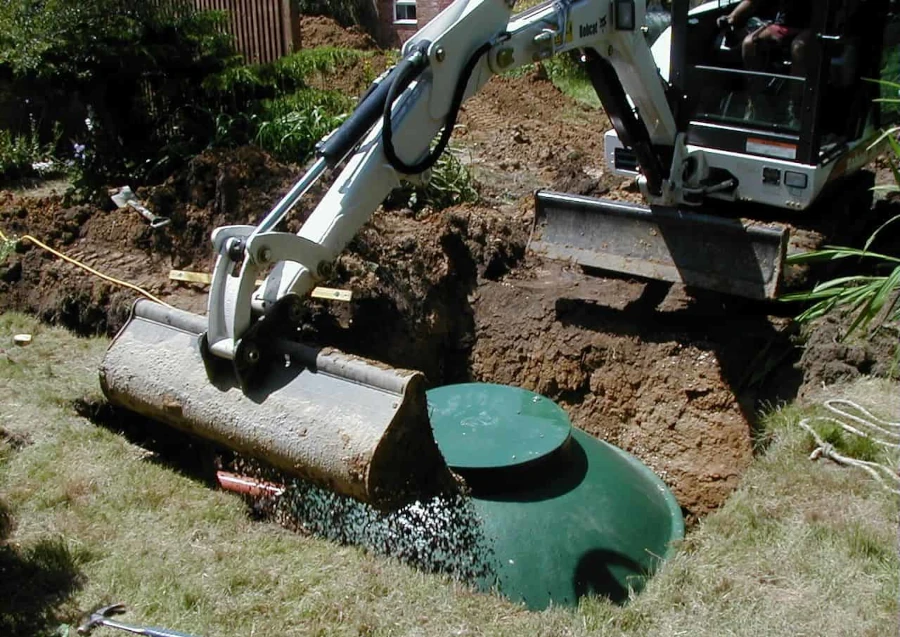
ConSept
If you’re replacing a septic tank because the soakaway has collapsed or gotten bunged up, a sound alternative is to install a ConSept in the existing tank – that is the Allerton septic tank conversion! This has the benefit of having the field drainage system shallow as possible, with the water clean as possible.
How does it work?
It’s an insertable device that fits inside your existing tank, with an air blower inside. This causes an aeration zone within the tank, which causes agitation, so when raw sewage enters this area it breaks up. The broken down solids are much easier to settle out in the tank, and pump away into shallower ground.
It’s also an aerobic treatment system, which means the air bubbling through the water encourages aerobic bacteria growth – another huge benefit, against traditional anaerobic septic tanks.
The empty space inside the Allerton ConSept is a settlement zone for the effluent, which allows the fine solids to settle out further. The treated effluent is gradually discharged, lifting into the sample chamber via siphonic action, where it can be pumped away. Another benefit is that with the ConSept, you can pump it away directly into a watercourse, with permission. If that isn’t available though, a pump can be placed at the end of the sample chamber to pump it further up the garden, to a shallower, more effective depth, away from the house.
Below is a look inside the ConSept kiosk, the external control centre of the septic tank conversion!
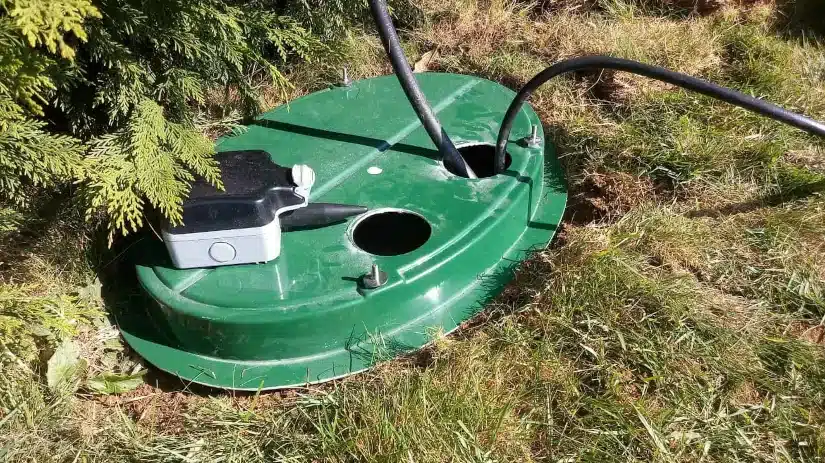
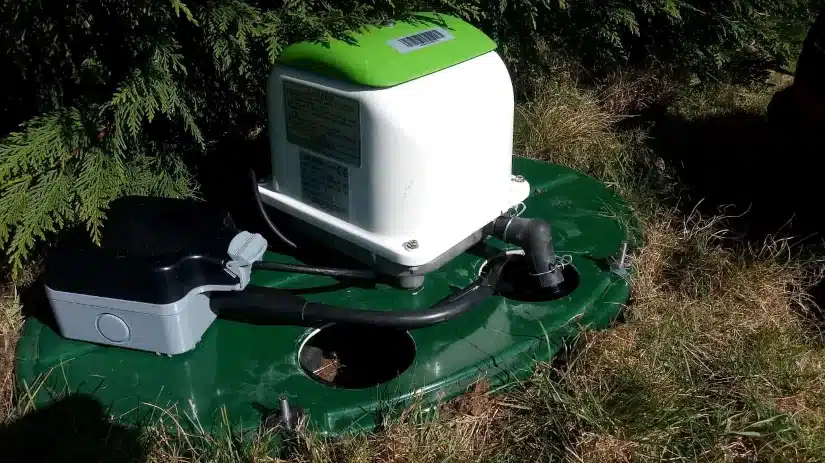
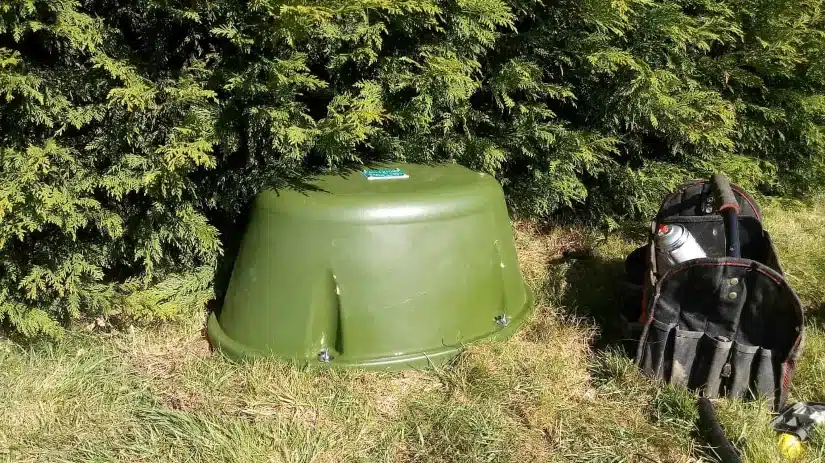
Am I legal?
To comply with the General Binding Rules you have to do a percolation test. This will ensure you’re discharging your septic tank at a legal depth. You can’t discharge it too deep as it will seep into the ground water – you can’t discharge too shallowly because the solids won’t percolate out effectively, and you can imagine the mess of that top-soil! The test involves a ft /300ml cube hole at the depth where the pipe will soak away. We need 3 of these along the route of the soakaway area, to check the percolation rate at all levels of the soakaway.
For a complete guide for this test, check out our Percolation Test resource, aka the handy Soakaway Size Calculator!
Tests will probably make it clear that if the septic tank outlet is a meter deep then in clay soils the water may not be able to percolate away especially in wet months. Sandy soil has its drawbacks too – the water table can rise in winter, and back up the pipes into the septic tank.
SO the advantage of the ConSept is that you can have a field drainage system (soakaway) at a much shallower depth. The percolation test will confirm this need for a smaller soakaway, which in a small garden, not only saves money, but makes the soakaway work more efficiently.
Top Tip: The Allerton Ground Water Tube (AGWT) can help you monitor your soakaway quickly and safely year-round, in 1 easy installation!

Will my septic tank work for a conversion?
Generally speaking a glass fibre septic tank is ideal. Size-wise they tend to be bigger and will allow more room for the ‘extra bits’. Whereas brick septic tanks need all the dimensions measured to establish that it is big enough, a survey can be provided.
Insider tip: The calculation for any field drainage system depends on the percolation rate, and the number of people in the house/houses.
Round up…
It is more cost effective over time to replace your septic tank with a sewage treatment system, or UPGRADE it with a septic tank conversion. Allerton can help you with that! Book a free quote to discuss what’s right for you, and we can provide our 5 Star service, with either a sparkly new system, or the best upgrade your pipes will thank you for, the ConSept!
5 Reasons to upgrade:
✅ Less emptying and low maintenance costs: Once a year servicing and twice a year desludging!
✅ No moving parts, compact system.
✅ Maintains better water levels, keeping the drains clear right up to where it matters, your home!
✅ Aerobic process reduces those nasty smells and odour.
✅ Discharge to a watercourse e.g river or ditch with permissions, or a soakaway.